
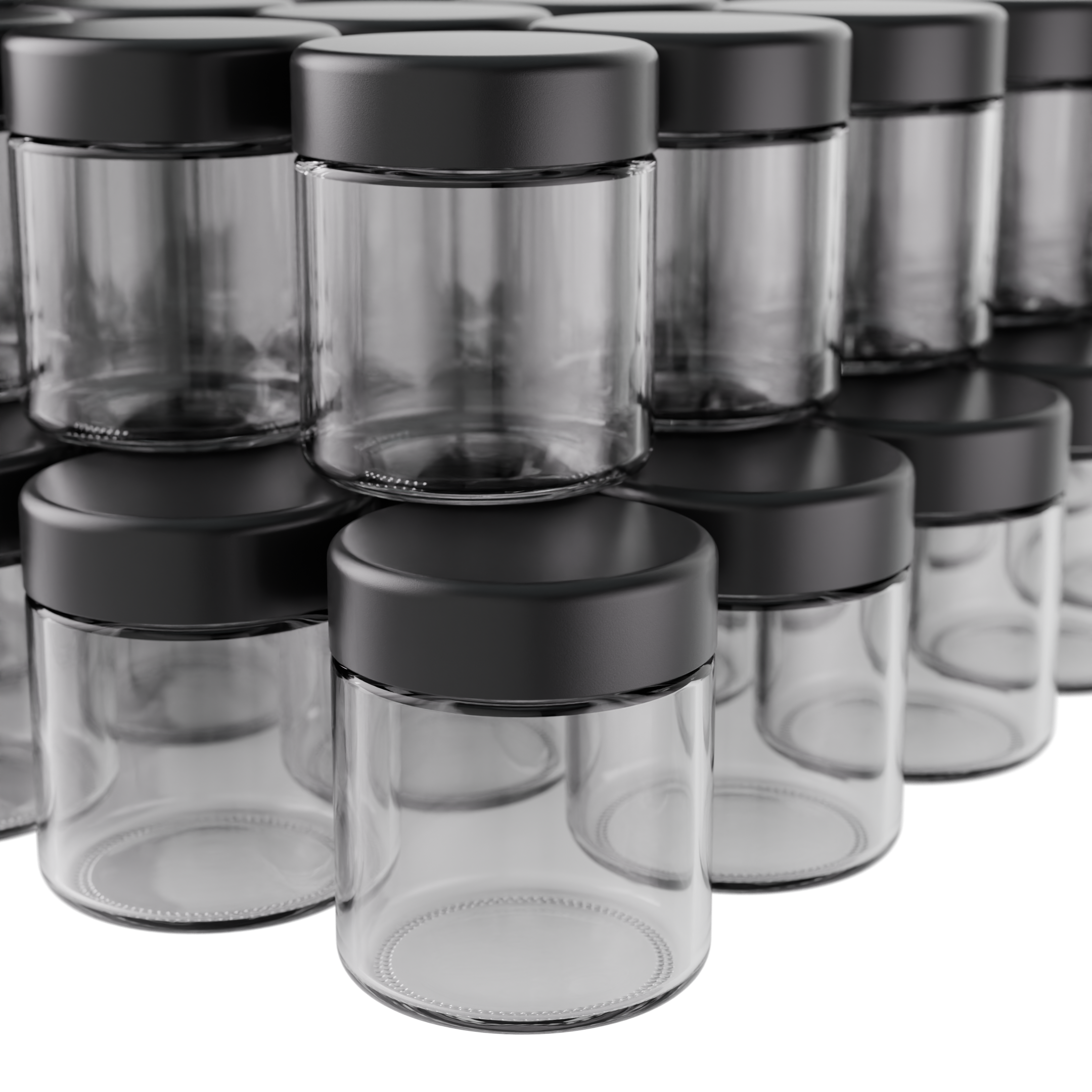
Two formats dominate cannabis flower retail packaging: the plastic pop-top bottle and the glass jar. Both are child-resistant. Both are widely accepted across regulated markets. Both take labels well and come in a range of sizes. So which one should your dispensary be using — and does the answer change depending on what you're selling?
Here's the full comparison.
The Case for Pop-Top Plastic Bottles
Cost. Pop-top bottles start at around $0.07/unit in wholesale quantities. Glass jars start at $0.24/unit and go up from there. At the volumes a typical dispensary runs — thousands of units per month — that difference adds up fast. If you're doing 3,000 eighths a month, the per-unit difference between a plastic bottle and a glass jar is potentially $500+ in monthly packaging costs.
Durability. Plastic doesn't break. Glass does. In a fast-moving retail environment where products are being handled by staff and customers dozens of times per day, the drop-and-shatter risk of glass is real. A broken glass jar in a dispensary is a cleaning and liability issue. A dropped plastic bottle bounces.
Weight. Plastic is significantly lighter than glass. For dispensaries doing delivery, lighter packaging means lower shipping costs and easier transport. For customers, a lighter package is more pocket-friendly.
Speed. Pop-top bottles are fast to fill and close. The mechanics are simple and consistent — your budtenders can package product quickly without worrying about a cap that doesn't align or a lid that needs to be seated perfectly.
Color options. Plastic pop-top bottles come in 15+ colors — opaque black, white, green, gold, aqua, purple, smoke, translucent clear, and more. Glass jars are typically available in clear or amber. If color is part of your brand identity, plastic wins on variety.
The Case for Glass Jars
Terpene preservation. Glass is non-porous and non-reactive — it doesn't interact with the volatile terpene compounds in cannabis the way plastic can over time. For premium, high-terpene flower where aroma and flavor are major selling points, glass provides a chemically neutral storage environment that plastic can't fully match.
Consumer perception. Glass signals quality. It's the same psychology that makes premium spirits, perfumes, and artisan food products use glass packaging — weight and transparency communicate value in a way that plastic doesn't. For a top-shelf strain or a premium house brand, glass packaging can genuinely support a higher price point.
Sustainability positioning. Glass is infinitely recyclable and doesn't generate the same environmental concerns as single-use plastic. For brands that have made sustainability part of their identity, glass is a credible commitment rather than a marketing claim.
Visual display. Clear glass jars let the flower be the display — which is a real sales advantage for visually distinctive, well-trimmed premium product. A gorgeous purple-trichomed top-shelf strain in a clear glass jar in a display case stops people. The same flower in a black plastic bottle doesn't have the same effect.
Label application. The smooth, rigid, cylindrical surface of a glass jar is actually one of the best label substrates available. Labels adhere perfectly, lay completely flat, and don't wrinkle. For brands that invest in high-quality printed labels, glass is the ideal canvas.
The Practical Verdict: Use Both
The most successful dispensaries don't choose one format — they use a tiered approach that matches packaging to price point:
Value and mid-tier flower ($10–$20/eighth): Pop-top plastic bottles. Cost-efficient, compliant, fast to fill, available in your brand's signature color.
Top-shelf and premium flower ($20–$40+/eighth): Glass jars. The per-unit packaging investment is a small fraction of the product's retail price and actively supports the premium positioning.
This approach lets you optimize packaging cost where margin is tightest, and invest in presentation where it drives the most return.
What About Concentrate Products?
For concentrates — wax, shatter, rosin, live resin, distillate — glass is almost universally the better choice. The 5ml glass concentrate jar is the industry standard for single-gram concentrate retail for good reasons: it's non-stick, non-reactive, easy to clean, and lets the product's color and texture be visible at point of sale. Concentrate consumers care about what the product looks like, and glass lets them see it.
Shop Both Formats at Dragon Chewer
Pop-Top Bottles — 127 products, 6–160 dram, 15+ colors, from $0.07/unit.
Glass Jars — 2oz, 3oz, 4oz flower jars + 5ml & 6ml concentrate jars, all child-resistant.