
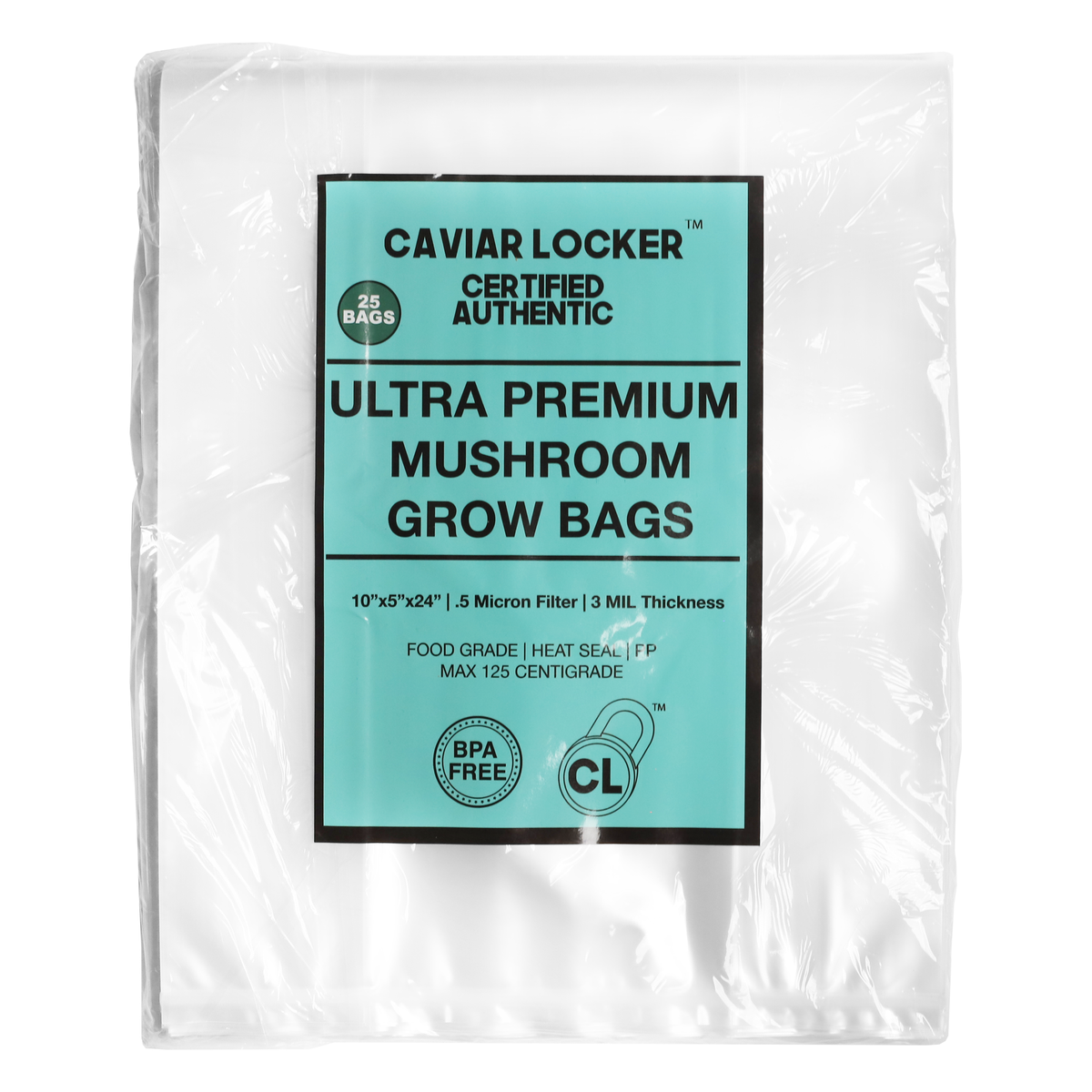
Mushroom Substrate Bags vs. Grain Bags: What’s the Difference?
If you’ve spent more than ten minutes in a mushroom growing community, you’ve heard both terms: substrate bags and grain bags. New growers use them interchangeably. That’s a mistake that leads to contaminated grows, wasted time, and money down the drain.
Here’s the plain-English breakdown: grain bags and substrate bags are different tools for different stages of a mushroom grow. Understanding which does what — and which specs matter for each — will make your grows more consistent and your buying decisions simpler.
Quick Definitions
Grain bags hold grain spawn. The grain — usually rye berries, wheat berries, milo, oat groats, or popcorn — has been cooked, sterilized, and is ready to inoculate. Grain bags carry the mycelium you’ll use to colonize your bulk substrate. They’re the starter culture stage.
Substrate bags hold the bulk growing medium that mycelium colonizes before it fruits. Common substrates include hardwood sawdust, straw, Masters Mix (a 50/50 blend of hardwood fuel pellets and soy hulls), and coco coir. Colonized grain spawn goes into the substrate bag to “run” the block.
Short version:
- Grain bags = inoculation stage
- Substrate bags = colonization + fruiting stage
Both use polypropylene bags with filter patches. But the specs that matter are different for each.
What Makes a Good Grain Bag
When you’re evaluating grain bags, you’re evaluating one thing: contamination protection during inoculation and early colonization. The grain is a rich growth medium — bacteria and competing molds love it as much as mycelium does.
Filter patch micron rating
Lower micron = tighter filtration. Grain bags spend days to weeks incubating, and loose filtration is an open invitation for airborne contaminants. Most serious growers use filter patches rated between 0.2 and 0.5 microns. Anything above 0.5 microns is a liability at this stage.
Self-healing injection ports
The best grain bags include a self-healing silicone injection port — an RTV silicone grommet built into the bag that reseals after a syringe needle passes through it. You inoculate with liquid culture or spore syringe without ever opening the bag. No laminar flow hood required. This is the single biggest contamination-reduction feature you can get in a grain bag. If you’re not running a clean room or flow hood, injection ports are non-negotiable.
Bag thickness
Grain bags go through pressure cooking or autoclave sterilization — typically 15 PSI for 2.5 hours or more. You need 2.5 mil or thicker polypropylene. Thin bags warp, collapse, or develop pinholes under sustained heat and pressure. Pinholes mean contamination.
Bag size
Grain bags are smaller than substrate bags. Common sizes are 1–2 quart volume equivalent. The standard grain-to-substrate ratio is 1:4 to 1:10 by weight, depending on species and spawn aggressiveness.
What Makes a Good Substrate Bag
Substrate bags run heavier and hold more volume. The specs here are about supporting colonization and enabling fruiting, not inoculation security.
Filter patch size
Larger substrate bags need proportionally larger filter patches. A 10″ × 5″ filter patch on a 10-pound block is appropriate. Undersized patches restrict gas exchange, which slows colonization and allows CO&sub2; to build up — that buildup stunts mycelial growth and delays pinning.
Micron rating
Substrate bags work in the same 0.2–0.5 micron range. Always know the micron rating before buying. “High-quality filter” is not a spec. Get the number.
Bag thickness and heat tolerance
Same requirement as grain bags — proper PP thickness to survive sterilization. Don’t use polyethylene (PE) bags. PE melts at pressure-cooking temperatures. PP doesn’t. If a supplier doesn’t clearly specify polypropylene, walk away.
Gusseted flat-bottom design
Quality substrate bags have flat-bottom gussets that let them stand upright. You can cut X-marks on the sides and let mushrooms pin and fruit directly out of the bag — no separate fruiting chamber required for many species. Oyster mushrooms fruit beautifully out of gusseted substrate bags.
Can You Use One Bag for Both?
Technically yes. In practice, most experienced growers use different bags because the volume requirements are so different. The exception is the all-in-one bag: a large polypropylene bag with grain and substrate in separate layers, plus a self-healing injection port at the top. You inoculate once. Grain colonizes first, then mycelium runs into the substrate below. No transfer needed.
All-in-ones cost slightly more per unit but eliminate one transfer step — which means one fewer contamination window. For beginners or anyone not running a flow hood, they’re often worth the trade-off.
Sizing and Volume Reference
| Bag Type | Common Volume | Typical Fill Weight | Species Fit |
|---|---|---|---|
| Grain bag | 1–2 qt | 0.5–1.5 lbs | All species |
| Substrate bag (small) | 3–5 lbs | 2–4 lbs | Oyster, shiitake |
| Substrate bag (medium) | 5–10 lbs | 4–8 lbs | Lion’s mane, reishi |
| Substrate bag (large) | 10+ lbs | 8–12 lbs | Commercial scale |
| All-in-one bag | 3–10 lbs | 3–8 lbs combined | All species, beginners |
Buying in Bulk: What to Know Before You Order
If you’re running more than a handful of grows per cycle, buying in bulk is the obvious move. Price per unit drops significantly at volume.
What to verify before ordering:
- Polypropylene, not polyethylene — PP handles sterilization temps. PE melts. If the listing doesn’t specify, that’s a red flag.
- Filter patch micron is listed — “Premium filter” tells you nothing. Get the actual micron rating. Standard is 0.2–0.5 microns.
- Injection ports are silicone — Self-healing ports should use RTV silicone. Cheaper materials don’t reseal cleanly after repeated punctures.
- Ships from the USA — Overseas bags look cheap until you factor in lead times, customs delays, and tariff volatility.
Dragon Chewer ships all mushroom grow bags from the USA. Free shipping on qualifying orders. No tariffs, no international delays.
When to Use Each: Quick Decision Guide
Use a grain bag when:
- You’re inoculating with liquid culture or spore syringe
- You want self-healing injection ports
- You need maximum contamination protection during inoculation
Use a substrate bag when:
- You’re loading bulk substrate — hardwood, straw, Masters Mix, coco coir
- You want to fruit directly out of the bag
- You need higher volume per unit
Use an all-in-one bag when:
- You’re a beginner who wants fewer transfers
- You’re growing one species at a time in small batches
- You want to reduce contamination windows without a flow hood
Bottom Line
Grain bags and substrate bags do different jobs. Knowing the difference lets you pick the right tool for each stage, buy smarter in bulk, and stop wasting grows on avoidable contamination.
If you’re still figuring out which format works best for your setup, test before you commit. Dragon Chewer offers a free sample pack so you can evaluate bag quality, filter patch performance, and injection port integrity in your own grow environment before placing a bulk order.
Browse the full line of mushroom grow bags and grow supplies — grain bags, substrate bags, all-in-ones, and accessories. Ships from the USA. Free shipping on qualifying orders. No tariffs.